
Why Organizations fail during crisis
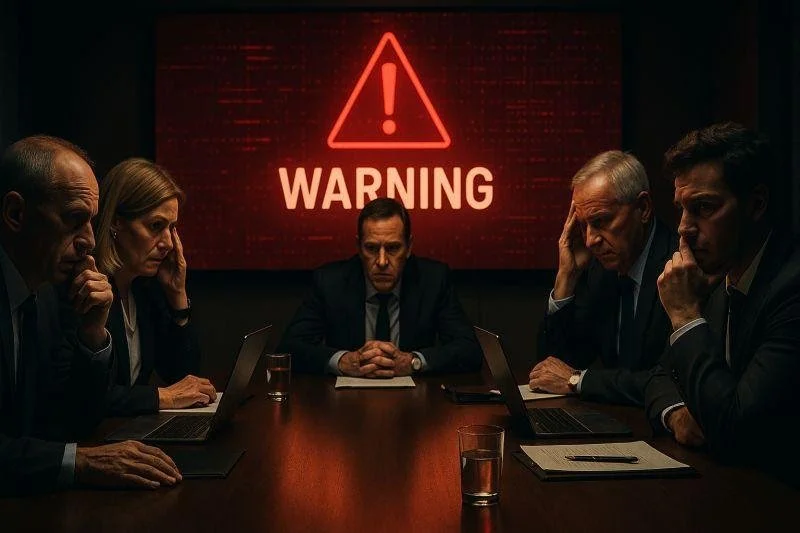
Most organizations do not fail during normal operations.
They fail during moments of uncertainty.
A workplace threat.
A cyber incident.
A product contamination concern.
A supply chain disruption.
An executive targeted online.
A critical injury.
A reputational event moving faster than the facts.
In those moments, organizations discover a hard truth:
You do not rise to the level of your expectations in a crisis.
You fall to the level of your preparation.
After more than three decades in policing, public safety leadership, and corporate security, I have seen firsthand that the difference between resilience and chaos is rarely luck. It is preparation, clarity, leadership, and communication.
The organizations that navigate crises effectively are not always the biggest or the most expensive. They are the ones that invested early in planning, training, relationships, and decision-making frameworks before the pressure arrived.
Security Is No Longer Just About Guards and Cameras
Modern risk environments are more complex than ever.
Today’s leaders face overlapping pressures involving:
Workplace violence concerns
Supply chain vulnerabilities
Insider threats
Executive protection issues
Regulatory expectations
Brand and reputational exposure
Social media amplification
Employee mental health and safety
Business continuity disruptions
Security today is fundamentally a business leadership function.
The conversation has shifted from:
“How do we protect the building?”
to:
“How do we protect the organization, its people, its reputation, and its continuity?”
That requires a different approach.
Calm Leadership Matters
One of the greatest misconceptions about crisis management is that leadership during emergencies is about control.
It is actually about composure.
Employees, stakeholders, customers, and executives take emotional cues from leadership during uncertainty. Panic spreads quickly. So does confidence.
The leaders who perform best under pressure are usually those who:
communicate clearly,
rely on trained subject matter experts,
make decisions with incomplete information,
remain adaptable,
and understand that credibility is built long before the crisis begins.
Strong crisis leadership is not loud.
It is steady.
Why Preparation Cannot Wait
Too many organizations delay preparedness because:
“It won’t happen here.”
“We’ve never had an issue.”
“We’ll figure it out if something happens.”
Unfortunately, modern crises move faster than organizational learning curves.
The companies that recover fastest are typically those that already have:
crisis management structures,
emergency communication plans,
escalation protocols,
trained response teams,
tabletop exercises,
and trusted external advisors.
Preparedness is not fear-based thinking.
It is responsible leadership.
The Stonehaven Approach
At Stonehaven Risk Group Ltd., our focus is simple:
Help organizations reduce risk, strengthen resilience, and prepare leaders to make sound decisions under pressure.
We believe effective security consulting should be:
practical,
professional,
discreet,
and aligned with business realities.
Not every organization needs a full-time Chief Security Officer.
But every organization benefits from experienced strategic guidance.
That is where fractional and advisory security leadership can provide value.
Final Thoughts
Every organization will face disruption at some point.
The question is not whether challenges will emerge.
The question is whether leadership will be prepared when they do.
Preparation builds confidence.
Confidence supports better decisions.
Better decisions protect people, operations, and reputation.
And in today’s environment, that matters more than ever.
About the Author
Frank Elsner is the founder of Stonehaven Risk Group Ltd. and a senior security and risk management executive with experience in policing, public safety leadership, crisis management, corporate security, and organizational resilience. He advises organizations on risk reduction, crisis preparedness, workplace safety, and strategic security leadership.